
Sometimes your teeth look fine, but something is going on underneath. Pain can come and go. A problem can be hiding where you can’t see it. That can be worrying. Dental imaging helps us look below the surface so we know exactly what’s happening. At Desert Lake Family Dentistry, we use dental X-rays in Avondale to find issues early and keep your mouth healthy.
Importance of Dental X-rays and Imaging
Dental X-rays in Avondale are images that show what’s happening inside your teeth, gums, and jaw. They help dentists see areas that can’t be checked during a regular exam. X-rays are important because they allow problems to be found early, often before pain or serious damage starts.
Dental X-rays help detect:
- Cavities between teeth
- Tooth infections or abscesses
- Bone loss from gum disease
- Impacted or missing teeth
- Cracks or fractures
- Jawbone problems
- Cysts or growths
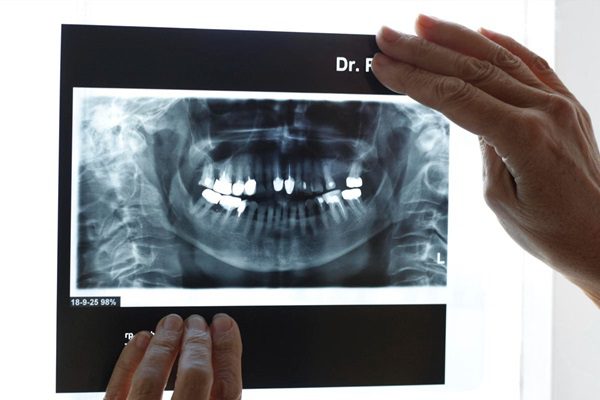
Types of Dental X-rays and Imaging in Avondale, AZ
Dental X-rays in Avondale fall into two main categories: intraoral and extraoral. Intraoral imaging is taken inside the mouth and gives detailed views of individual teeth and the surrounding bone. Extraoral imaging is taken outside the mouth and shows a wider view of the jaw, face, and teeth.
Intraoral X-Rays vs. Extraoral X-Rays
One focuses closely on specific teeth, while the other looks at the bigger picture.
Feature | Intraoral Imaging | Extraoral Imaging |
Where they are taken | Inside the mouth | Outside the mouth |
Level of detail | Very detailed view of teeth | Broad view of jaw and face |
Main use | Detect cavities and tooth issues | Evaluate jaw, bite, and growth |
Common examples | Bitewing, periapical | Panoramic, CBCT |
Patient comfort | Small sensor inside mouth | No sensor placed inside mouth |
Benefits of Dental X-Rays and Imaging
Dental X-rays in Avondale:
- Help find problems early, before pain starts.
- Detect issues that can’t be seen during a regular exam.
- Improve accuracy in diagnosis and treatment planning.
- Monitor changes in teeth, gums, and bone over time.
- Support safer and more precise dental procedures.
- Use low radiation with modern digital technology.
Dental Imaging Center Near Me
Meet Our Dentist
Dr. Shayegan is a skilled and compassionate dentist who uses modern dental imaging to provide accurate and comfortable care. He earned his Doctor of Dental Medicine from Tufts University and is a member of the American Dental Association and the Academy of General Dentistry. He uses dental X-rays in Avondale to carefully evaluate oral health, explain findings in simple terms, and create clear treatment plans patients can trust.
Schedule your appointment today and get clear answers about your dental health from our trusted local dentist:
- Our clinic is located at 10750 W McDowell Rd, Suite B200, Avondale, AZ.
- You can call 623-388-5888.
- 4.8 Google rating
Posted on Google
 Gabby Vega
 Love DesertLake and all of their employees!!Posted on Google
 Angela LealSo pleased with the remarkable staff and their professionalism. I felt so comfortable and that is so important 🫶.Posted on Google
 zulusmurf23So like many (or maybe it’s just me) the dentist is always hard to go to because I don’t like needles. But I will say my experience from being greeted walking through the door to meeting my doctor and my service was one that has changed my perspective and I might have found a new home dental care. I went in through a suggestion from a friend and I am SO SO THANKFUL Dr. Ermias Mehretab. Everything thing he did he greeted me, explained what we were going to do next, and honestly I HATE needles but he truly had a soft touch and it felt effortless but allowed me to relax a lot more. Also his dental assistant for my time, Maria kept checking on me and brought me water and explained all to me before I left payment wise. Just great Overall great experince, love it and will be going back!Posted on Google
 Ricardo UriarteLove the new hygentist Karina love the fact she’s very knowledge and cares for our teeth and gums !!Posted on Google
 Maria SousaNice and clean office , staff was great, recommended 100%Posted on Google
 Rigo GaribaldiReally good place to go if you need any type of dental work. The front and back office people are really friendly and nice. You will be in good hand with them. Definitely will be coming back every year.
What Should I Expect during a Dental X-ray or Imaging Procedure?
When you get dental X-rays in Avondale, we keep the process quick, comfortable, and easy to understand:
- Our team explains the imaging process before we begin, so you know what to expect.
- We place protective shielding and position you comfortably.
- We use modern digital equipment to capture clear images in seconds.
- Dr. Shayegan reviews the images carefully to look for hidden issues.
- We go over the results with you and answer any questions right away.
What about Pediatric Dental X-rays?
A child’s dental X-rays in Avondale are used when needed to check tooth development, find cavities between teeth, or monitor jaw growth. They are commonly recommended when a child has a higher risk of cavities, pain, delayed tooth eruption, or crowding. Modern pediatric dental X-rays are safe and use very low radiation, with protective shielding to keep exposure minimal.
How Often Should I Get Dental X-rays and Imaging?
- Low-risk adults with healthy teeth: Every 12–24 months
- High-risk patients (history of cavities, gum disease, or dental problems): Every 6–12 months
- Children and teens: Every 6–12 months to monitor growth and tooth development
- New patients: Full imaging at the first visit to establish a baseline
- After dental treatment (implants, root canals, extractions): As needed to monitor healing
- Jaw pain, infection, or trauma: Immediately diagnose the issue
FAQs
What kind of X-ray is used for the root canal?
A periapical X-ray is typically used for root canal procedures. It provides a detailed image of the entire tooth, including the root and surrounding bone.
What are the reasons not to get dental X-rays?
You might avoid dental X-rays if you are pregnant (unless necessary), have had recent radiation exposure from other medical procedures, or have specific medical conditions that warrant caution.
What type of image would reveal gingivitis?
Bitewing X-rays can help reveal gingivitis by showing bone loss and tartar buildup around the teeth, which are indicators of gum disease.
Do dental X-rays show cancer?
Dental X-rays can sometimes detect signs of oral cancer, like abnormal growths or lesions in the jaw. However, they are not typically used as a primary tool for diagnosing cancer; a biopsy is usually needed for confirmation.
Are dental X-rays and imaging safe?
Yes, modern digital X-rays use very low radiation and are considered safe for most patients.
How is the cost of dental X-rays in Avondale?
The cost varies based on the type of imaging needed and your dental plan.
Can I refuse dental X-rays?
Yes, you can decline, but X-rays help detect hidden problems that may not be visible during an exam.
How much are dental X-rays without insurance?
Costs vary by type of imaging, and our team can provide an estimate before your visit.
Related Blogs
Top 6 Reasons to Have Your Wisdom Teeth Removed
Wisdom teeth usually come in between the ages of 17 and 25. They grow at the back of the mouth and often don’t have enough space.
What You Should Know About Dental X-Ray Frequency
X-rays help find problems that the dentist cannot see with the eye. Knowing the right dental X-ray frequency helps prevent serious issues. Most people do not

Dental emergencies can happen unexpectedly. If you have a bad toothache or break a tooth, you might wonder, “Will an ER remove a tooth?” In this