
What Is Pregnancy Gingivitis?
April 13, 2026
Reviewed by Dr. Adel Shayegan, DMD, FICOI
Last Updated: July 2026
Reading Time: 8 minutes
You just whitened your teeth, and you took a sip of coffee or a drink of ice water. Suddenly, you felt a sharp zing. If this happened to you, you might be experiencing something called sensitive teeth after whitening.
Is teeth sensitivity after whitening normal? Actually, yes. It is common, normal, and does not mean the treatment failed or that your teeth are damaged. How strong it feels and how long it lasts depends on how sensitive your teeth already were and which whitening method you used.
In this blog, we will cover why whitening causes sensitivity, how long it usually lasts, what actually helps, and when it is worth calling your dentist.
Why Do Teeth Get Sensitive After Whitening?
Whitening gels use hydrogen peroxide or carbamide peroxide to break down stains inside your enamel. To reach those stains, the gel passes through tiny channels in your teeth called dentinal tubules. These tubules lead straight to the nerve inside your tooth.
While the tubules are open, hot, cold, or even air can reach the nerve more easily. That is what causes the short zinging feeling.
There is a second reason, too. Whitening pulls some moisture out of your teeth during treatment. That temporary dryness makes the nerve even more reactive, which adds to the sensitivity on top of the open tubules.
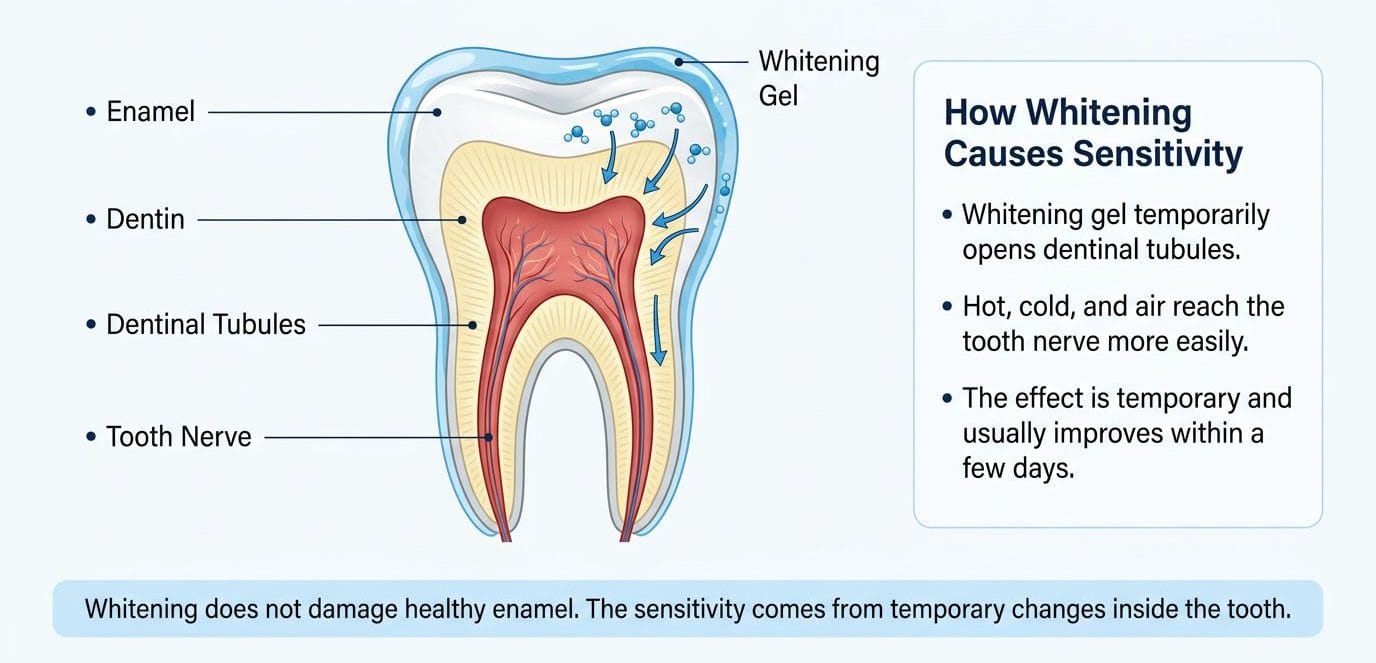
Causes of Sensitivity After Teeth Whitening
Some people feel more sensitivity than others. A few things tend to make it worse:
- Already having sensitive teeth before you start whitening
- Gum recession, where your gums have pulled back and left part of the tooth root exposed without any enamel to protect it
- A cavity or a cracked tooth that has not been treated yet, which can let the gel reach the nerve more easily
- Using a stronger whitening gel, or leaving the gel on your teeth longer than recommended
- Whitening too often, such as every day or on back-to-back days, without giving your teeth time to recover
- Enamel that is already thin or worn down, which gives your teeth less natural protection
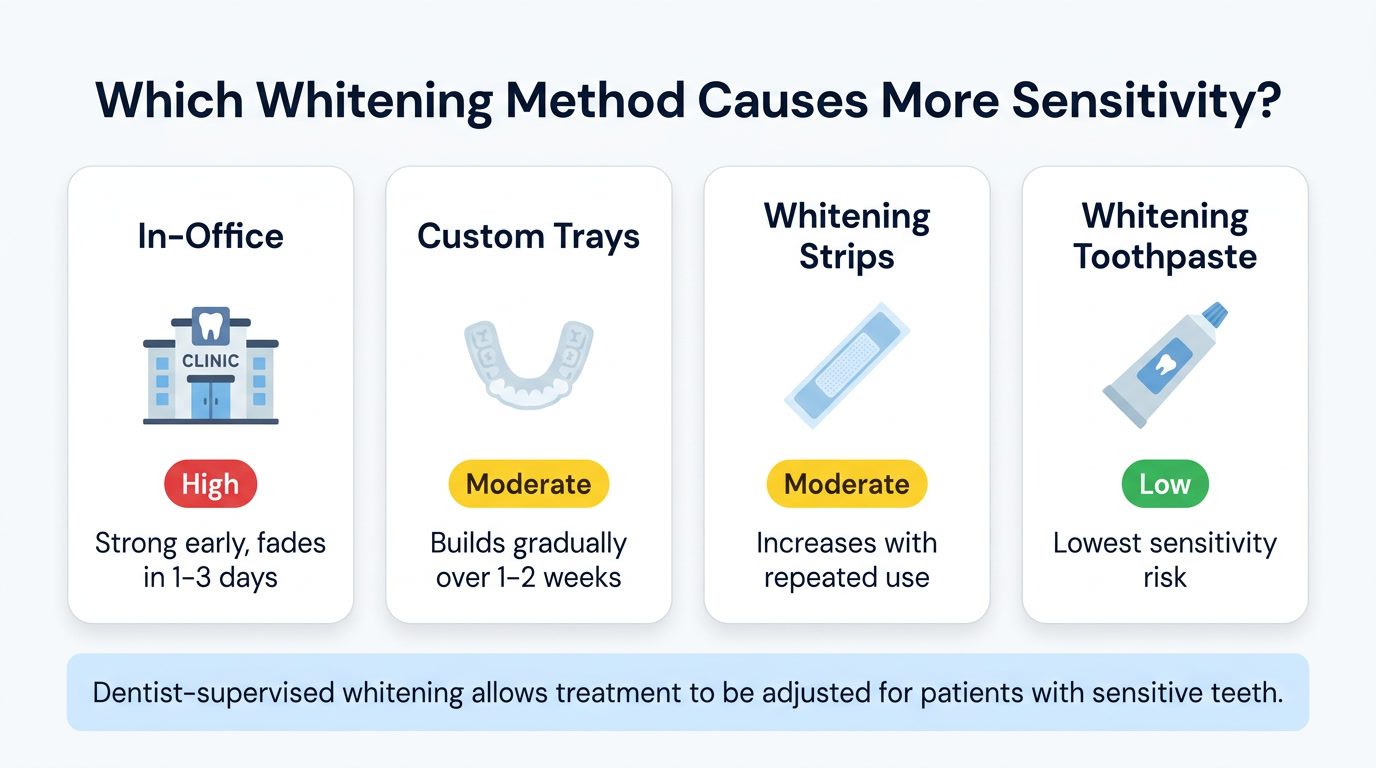
Does the Whitening Method Change How Much Sensitivity You Feel?
Yes. Different whitening methods cause sensitivity in different ways.
| Method | What to expect |
| In office professional whitening | Sensitivity often peaks in the first few hours, since the gel is stronger and used in one supervised visit. It usually fades within one to three days. |
| Dentist provided at home trays | Milder per use, but it can build up slowly over one to two weeks of nightly use. |
| Over the counter whitening strips | The more often you use strips, and the longer you leave them on, the higher your chance of sensitivity. |
| Whitening toothpaste | This carries the lowest risk of sensitivity. It only works on surface stains and barely touches the dentin. |
Dr. Shayegan’s Note: When a dentist supervises your whitening, they can adjust the gel strength or the time it stays on your teeth. That is something over-the-counter products cannot do for you.
Steps to Take Before Your Teeth Whitening Treatment
A little prep before you whiten can save you a lot of discomfort later. Here is what to do first:
- Book a cleaning and exam so your dentist can catch and treat any cavities, cracks, or gum recession before you start.
- Tell your dentist about any sensitive teeth, exposed roots, or existing dental work like crowns or veneers, since these will not change color with whitening.
- Ask about custom trays instead of generic strips, since a proper fit is less likely to irritate your gums or expose your roots.
- Start using a desensitizing toothpaste one to two weeks ahead of time if you are prone to sensitivity.
- Ask your dentist about a lower strength gel or a shorter treatment time.
- Follow the whitening instructions closely and avoid using an at-home kit more often than directed.
What Helps with Teeth Sensitivity after Whitening
Here are some teeth whitening sensitivity relief steps to help calm things down while your teeth recover:
Switch to a Desensitizing Toothpaste
Look for a toothpaste with potassium nitrate or stannous fluoride. Potassium nitrate calms the nerve inside your tooth, and stannous fluoride helps strengthen your enamel. Using it for a few days after whitening can take the edge off the discomfort.
Avoid Hot, Cold, and Acidic Foods and Drinks
Very hot or cold food and drinks can trigger sharp discomfort while your teeth are still recovering. Acidic foods and drinks, like citrus fruit or soda, can add to the irritation. Stick to room temperature, mild foods and plain water for the first day or two.
Brush Gently and Wait Before You Brush
Use a soft-bristled toothbrush and light, circular motions. If you have just eaten or had a drink, wait about 30 minutes before brushing. Your mouth is more acidic right after eating, which softens your enamel for a short time, so brushing too soon can add extra wear.
Drink Through a Straw
Right after whitening, your teeth are more likely to react to whatever touches them. Drinking through a straw keeps liquid away from the front of your teeth, which can lower discomfort and help protect your new results from staining.
Give Your Teeth a Break
If you are using an at-home kit, do not whiten again right away. Spacing out your sessions gives your teeth time to recover and lowers your risk of ongoing sensitivity.
Use a Fluoride Rinse or Gel
Fluoride helps rebuild and strengthen your enamel. Your dentist may recommend a fluoride rinse or gel to use at home, which can ease sensitivity and help protect your teeth going forward.
How Long Does Teeth Sensitivity Last After Whitening?
Most people feel sensitivity for a few hours up to two or three days. Some feel it for up to a week. It is uncommon for sensitivity to last more than two weeks.
Here is what to expect, day by day:
| When | What to expect |
| Day 0 to 1 (first 24 hours) | Sensitivity is usually at its strongest here. Short zings to hot, cold, or air are common and expected. |
| Day 2 to 3 | For most people, sensitivity is already fading. It may still show up with very hot or very cold food and drinks. |
| Day 4 to 7 | Sensitivity should be mild or gone for most people. You might still feel small twinges, especially after using at home whitening strips. |
| Beyond 1 to 2 weeks | This is uncommon. See your dentist to check for a cavity, gum recession, or another cause. |
Can You Prevent Sensitivity Before It Starts?
If you already know your teeth run sensitive, a little prevention goes a long way. Here are the main ways to avoid teeth sensitivity even before you start whitening:
- Start using a desensitizing toothpaste one to two weeks before your treatment, so your teeth are already less reactive when whitening begins.
- Book a dental exam first, so your dentist can treat any cavities, cracks, or gum recession that would make sensitivity worse.
- Ask your dentist about a lower strength gel, which whitens more gradually but is gentler on the nerve.
- Ask about a shorter treatment time, since less contact time with the gel means less chance of irritation.
- Space out your whitening sessions instead of whitening on back-to-back days, so your teeth have time to recover.
- Let your dentist know about any sensitive teeth or exposed roots you already have, so they can build the plan around that from the start.
Doing even one or two of these can make a real difference. Combining several of them, especially the toothpaste and the exam, gives you the best shot at whitening with little to no discomfort.
Best Painkiller for Sensitive Teeth After Whitening
Some people reach for an over-the-counter pain reliever like ibuprofen or acetaminophen. These can ease general discomfort when taken as directed on the package. A topical oral gel with benzocaine, used briefly and as directed, can also help with local discomfort.
Keep in mind that pain relievers ease the ache. They do not treat the cause the way a desensitizing toothpaste does. If you take other medications, are pregnant, or manage a health condition, check with a pharmacist or your doctor before using any pain reliever.
When to Call Your Dentist
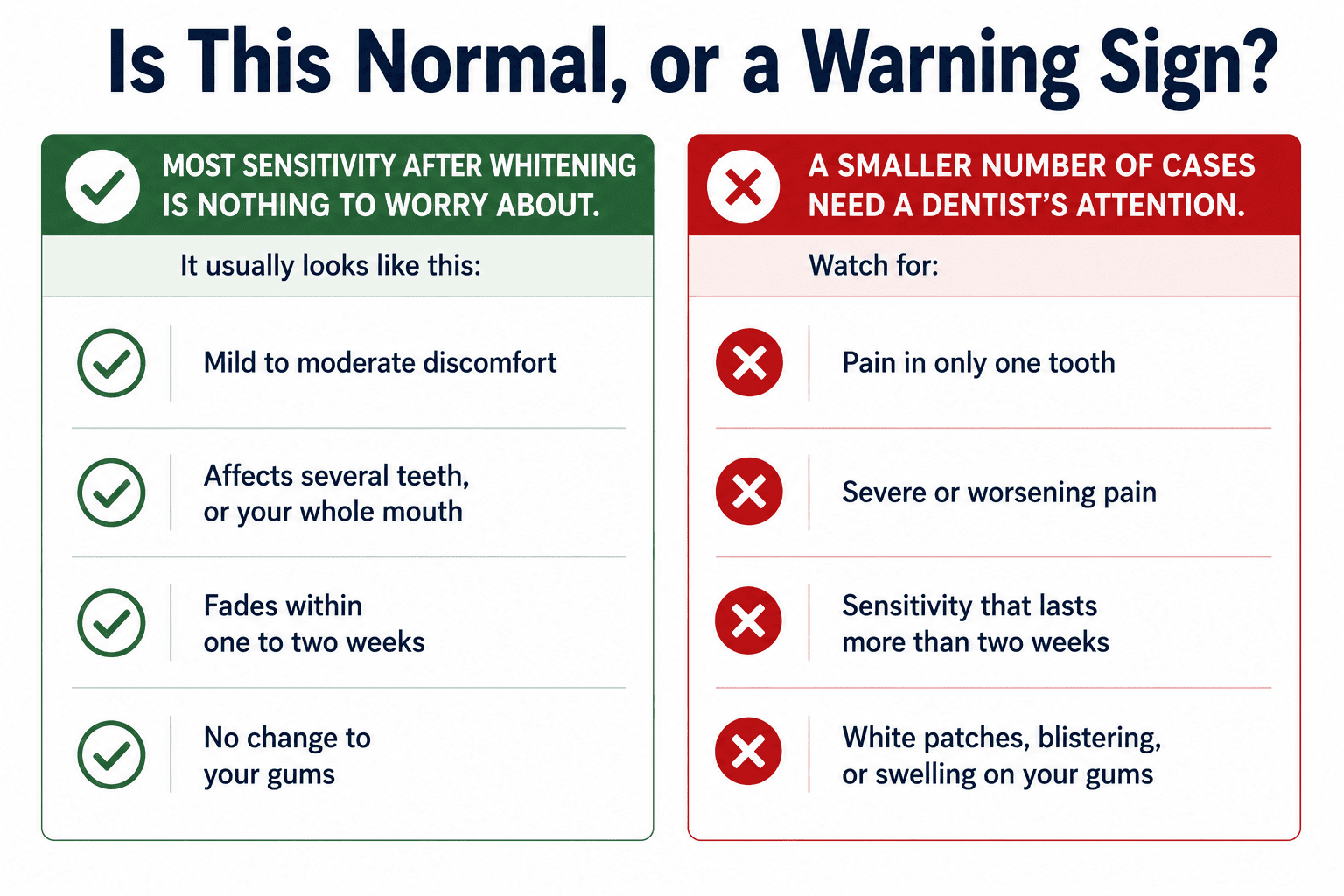
Most sensitivity after whitening fades on its own within a week or two. But a few signs mean it is worth calling your dentist instead of waiting it out:
- Pain in only one tooth
- Severe or worsening pain
- Sensitivity that lasts more than two weeks
- White patches, blistering, or swelling on your gums
- Sharp pain that happens even when you are not eating or drinking
If you notice any of these, Desert Lake Family Dentistry can help. We offer both professional teeth whitening for sensitive teeth and same-day dental emergency appointments, so you do not have to wait if your sensitivity turns into real pain.
Your care is led by Dr. Adel Shayegan, DMD, FICOI. He earned his dental degree from Tufts University in 1997 and has been practicing for over 25 years. He also completed advanced implant dentistry training at the USC School of Dentistry, covering both surgical and restorative care. That level of experience helps him quickly tell the difference between normal whitening sensitivity and something that needs treatment, so your care plan fits what your teeth actually need.
Call us at 623-388-5888 or visit us at 10750 W McDowell Rd, Suite B200, Avondale, AZ 85392 to schedule an exam or an emergency visit.
FAQs
Is teeth sensitivity after whitening normal?
Yes. Mild, temporary sensitivity is one of the most common whitening side effects. It is not a sign of damage.
Why do my teeth hurt more after whitening strips than in-office whitening?
Strips use a lower strength gel per use, but using them daily for one to two weeks can add up. A single in-office visit uses a stronger gel, but only once.
What helps sensitive teeth after whitening fast?
A desensitizing toothpaste, avoiding very hot, cold, or acidic food and drinks for a day or two, and pausing further whitening until it settles.
Can teeth whitening damage your enamel?
No. Properly used whitening products do not wear down or thin your enamel. Sensitivity comes from temporarily open dentinal tubules and mild dehydration, not enamel loss.
Should I stop whitening if my teeth become sensitive?
Yes. Pause treatment until the sensitivity goes away. Continuing to whiten through discomfort can make it last longer.
Can I still get whitening if I already have sensitive teeth?
Often yes. Your dentist can check for cavities or gum recession first, then adjust the gel strength or timing to fit your teeth.
Why is my tooth sensitive to cold?
Whitening temporarily opens tiny channels in your teeth that lead to the nerve. Cold reaches the nerve faster through these open channels, which is why cold drinks or air can cause a quick, sharp zing.
Is it okay to keep whitening if my teeth are sensitive?
It is best to pause. Continuing to whiten while your teeth are sensitive can make the discomfort last longer. Wait until it settles, then consider a lower strength gel or shorter session.
Does tooth sensitivity from whitening go away?
Yes. For most people, it fades within a few days to a week on its own. It is not permanent and does not mean your teeth were damaged.