
If you have a tooth extraction on the calendar, you have probably already searched online for what to do before tooth extraction and found a lot of general advice. The problem is that general advice does not always match your case.
In broad terms, that means telling your dentist about every medication you take, following a fasting window if you’re being sedated, and lining up a ride home if you need one. The problem is that the exact details change based on your case. The right way to prepare depends on two things: whether your extraction is simple or surgical, and what kind of sedation you are having.
This guide is built around both, instead of giving you one generic list. If you want more detail on the procedure itself, see our tooth extraction process page.
Table of Contents
ToggleSimple vs. Surgical Extraction: Why It Changes Your Prep
Not every tooth extraction is the same, and knowing which kind you’re having helps your tooth extraction preparation.
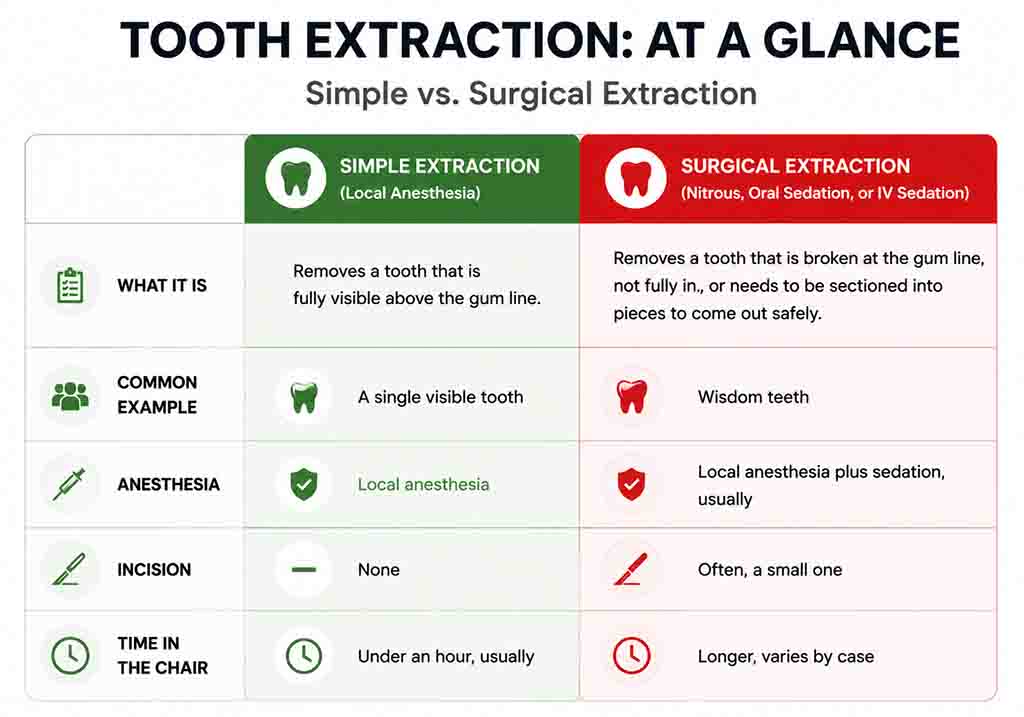
Knowing which one applies to you tells you which sections below to focus on. Use the extraction-type section first, then the sedation section, since most of your specific instructions come from your sedation plan.
How to Prepare for a Tooth Extraction? Based on Type
Your dos and don’ts after a tooth extraction are not the same for every extraction:
Simple Extraction
- Eat normally beforehand. Fasting is usually not required, but confirm this with our office when you book.
- Tell your dentist about every medication, vitamin, and supplement you take before your appointment.
- If your dentist prescribes something to take beforehand, follow those instructions exactly.
- Plan to drive yourself home, since local anesthesia alone does not usually affect your ability to drive.
- Arrive as usual. No special preparation is needed beyond the steps above.
Surgical Extraction (Including Wisdom Teeth)
- Follow the fasting window for your specific sedation type, covered in the next section, instead of eating normally.
- Arrange a driver ahead of time, since sedation usually means you cannot drive yourself home.
- Tell your dentist about every medication, vitamin, and supplement you take, especially blood thinners or NSAIDs.
- Clear your schedule for the rest of the day. Healing takes a bit longer after a surgical extraction, so plan to rest.
When people talk about what to do before tooth extraction, they usually forget about timing. To help you get ready, here’s a timeline of what to do between your consultation and the day of your extraction.
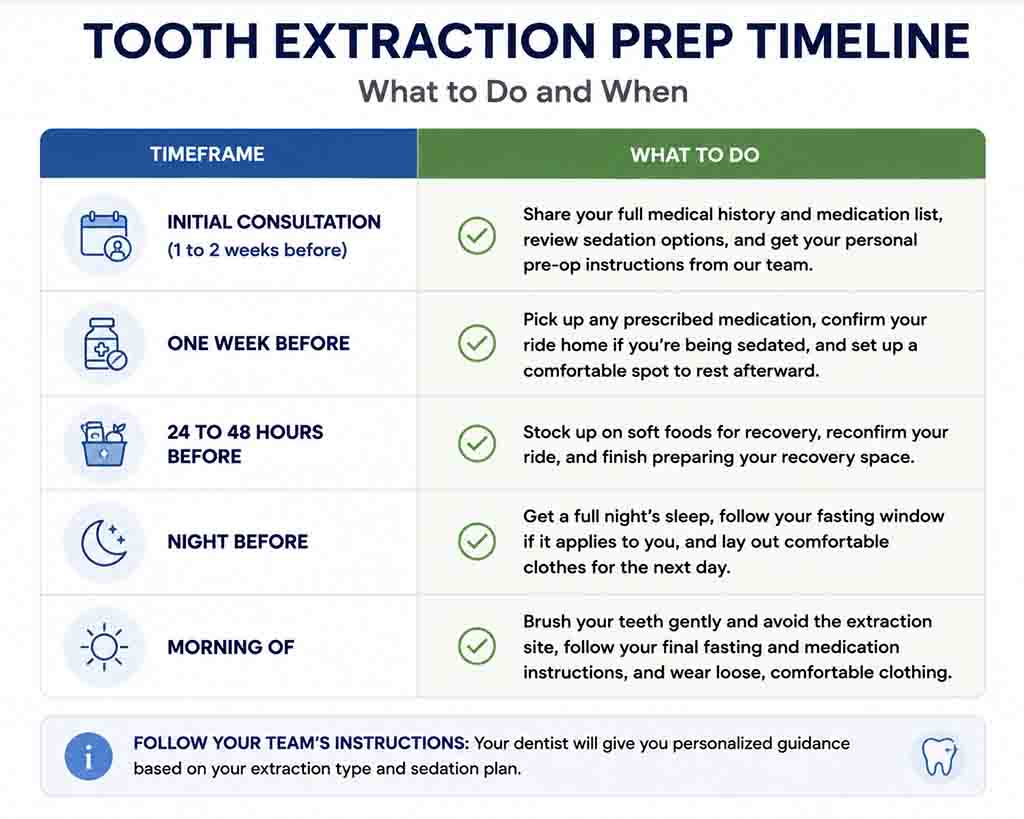
Tooth Extraction Preparation Based on Sedation Type
Your sedation plan decides your fasting window, your medication timing, and whether you need a driver. Find your sedation type below and follow that section specifically.
Local Anesthesia Only
If you are only having local anesthesia, you typically do not need to fast beforehand. Some offices still recommend a light meal before any dental procedure, so confirm this with our team when you book. Most patients don’t experience driving impairment from local anesthesia alone, so you can usually drive yourself to and from your appointment. If you feel unusually groggy or unwell afterward, arrange a ride instead.
Nitrous Oxide (Laughing Gas)
Nitrous oxide usually comes with a lighter fasting guideline than IV sedation, but the exact window still depends on our office’s protocol, so confirm it before your appointment. Most patients can drive themselves home afterward, since nitrous oxide wears off quickly, but check with our team rather than assuming.
Oral Conscious Sedation or IV Sedation
Oral conscious sedation and IV sedation both call for a longer, specific fasting window. Many dental offices base their fasting rules on standard guidelines for sedation procedures, such as those published by the American Society of Anesthesiologists, but your exact window comes from our office, not a number you find online.
You will need a driver for this level of sedation, since the effects can last several hours after your appointment ends. Also remove any jewelry, nail polish, and metal accessories beforehand. Metal and nail polish can interfere with the monitoring equipment, like the pulse oximeter clipped to your finger, that keeps track of your vitals during the procedure.


Can You Wear a Bra During Wisdom Teeth Surgery?
It depends on what the bra is made of. Underwire and other metal parts can interfere with the same monitoring leads that jewelry and metal accessories affect during IV sedation. If you are having IV sedation for wisdom teeth removal or another surgical extraction, wear a soft, wire-free bra, or ask our team what they recommend when you check in.
Medications to Disclose Before a Tooth Extraction
Concerns about what to do before tooth extraction absolutely include medication and drugs. Tell your dentist about every medication, supplement, and over-the-counter drug you take before your extraction. It gives your dentist the full picture so they can plan around it safely. Your dentist can then tell you about the drugs to avoid before a tooth extraction.
Here are the common drugs patients are concerned about:
Medication | Category | Why it matters |
Ibuprofen | NSAID | Can affect blood clotting and bleeding risk |
Aspirin | NSAID | Can affect blood clotting and bleeding risk |
Mefenamic acid (Ponstan, Ponstel) | NSAID | Same bleeding-risk consideration as ibuprofen and aspirin |
Warfarin, clopidogrel, and other blood thinners | Anticoagulant | Should never be paused without your prescribing doctor’s approval |
Fish oil, ginkgo, garlic supplements | Supplement | Can also thin the blood, so worth disclosing even though they’re not prescription drugs |
Notes:
- Tell your dentist about every painkiller you take, including ibuprofen, aspirin, and mefenamic acid (Ponstan, Ponstel). All three are NSAIDs and can affect blood clotting. Let your dentist decide if anything needs to change.
- If you take a prescribed blood thinner or anticoagulant, do not stop it on your own. Only the prescribing doctor can approve that change. Your dental team will coordinate with them if needed.
Tooth Extraction Dos and Don’ts: Alcohol, Smoking, and Transportation
Talking about what to do and what not to do before tooth extraction usually brings us to a few everyday habits:
- Avoid alcohol in the day or two before your appointment, especially if you are having any form of sedation. Alcohol can interact with sedation medication and make it less predictable. Ask our office for the exact window they recommend for your case.
- If you smoke, ask our office how long before your appointment you should stop. The right window depends on your health history, so we will confirm it with you directly rather than giving you a one-size-fits-all number.
- Arrange transportation based on your sedation type. Local anesthesia usually does not require a driver. Nitrous oxide typically does not either, but confirm this with our team. Oral sedation and IV sedation both require a driver, since you should not drive yourself home afterward.
- If you develop new pain, swelling, or a fever in the days before your appointment, do not wait for your scheduled visit and seek emergency dental care right away.
What to Eat the Day Before and Morning of
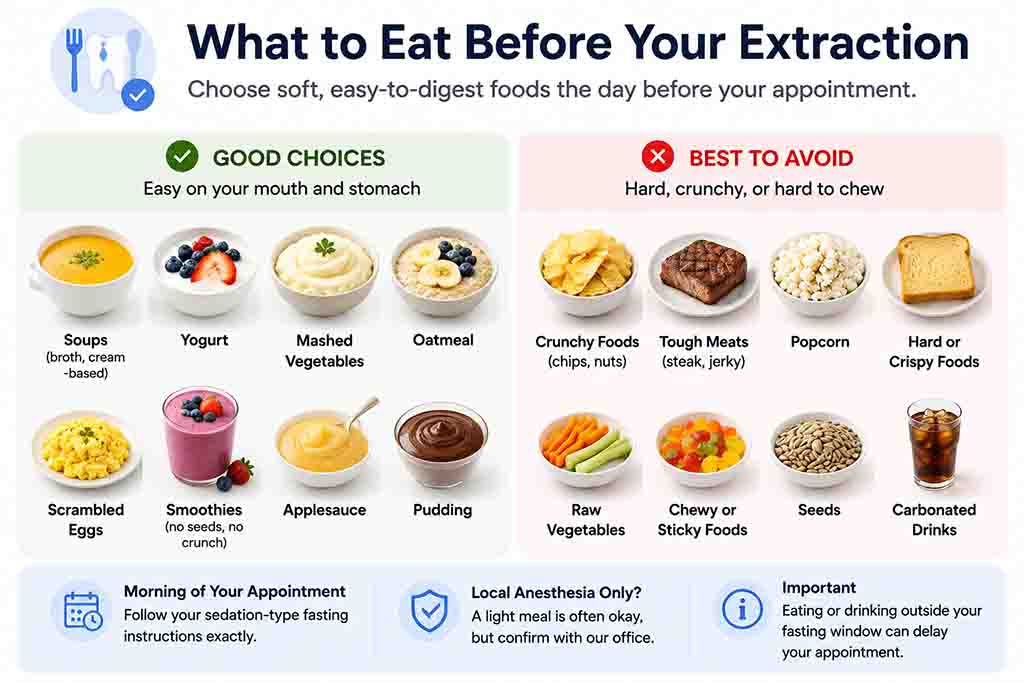
The day before your extraction, stick to soft, easy-to-digest foods. Think soups, yogurt, mashed vegetables, and similar options that are gentle on your system.
The morning of your appointment is governed entirely by your sedation-type fasting window, covered above. If you are only having local anesthesia, a light meal is often fine, but confirm this with our office first.
If you are having any form of sedation, follow the fasting window you were given exactly, since eating or drinking outside that window can mean your appointment needs to be rescheduled.
Preparing for Tooth Extraction: Let’s Recap
Knowing what to do before tooth extraction comes down to two things: your extraction type and your sedation plan. Once you know both, the fasting, medication, and transportation instructions in this guide become simple to follow.
At Desert Lake Family & Cosmetic Dentistry, Dr. Shayegan DMD, FICOI, offers both simple and surgical tooth extractions, and we walk every patient through a consultation before the day of the procedure so nothing is left to guesswork. Whether you need a straightforward extraction or a more involved surgical one, our team gives you guidance matched to your specific case.
If you have a tooth removal coming up and want to confirm your prep instructions, call our Avondale office at 623-388-5888 or schedule your appointment online. We’ll walk you through exactly what to expect before your visit.
Every instruction in this guide is general. Your treating dentist’s specific pre-op instructions for your appointment always come first, so when in doubt, call our office and ask.
FAQs
Can I eat before a tooth extraction?
Yes, if you’re only having local anesthesia, a light meal is usually fine. If you’re being sedated, follow the fasting window for your sedation type.
Can I take Ibuprofen before tooth extraction?
Check with your dentist first. Ibuprofen can affect bleeding risk for some patients, so don’t stop or continue it on your own.
Can I take mefenamic acid before a tooth extraction?
Check with your dentist first. It’s an NSAID, so it carries the same bleeding-risk concern as ibuprofen.
Is it safe to have a tooth extraction while taking a blood thinner?
It can be safe to have a tooth extraction while taking a blood thinner, but this depends on your specific case and requires your prescribing doctor’s guidance.
What should I not do before a tooth extraction?
Don’t drink alcohol, smoke close to your appointment, take undisclosed medication, or skip your fasting window if you’re sedated.
Do I need someone to drive me home after a tooth extraction?
Only if you’re sedated, local anesthesia alone usually doesn’t require a driver.
How many hours before a tooth extraction should I stop eating?
It depends on your sedation type. Our office will give you the exact window.
What should I do 24 hours before a tooth extraction?
Confirm your ride and sedation plan, follow your fasting window, and avoid alcohol and smoking.
How can I make my tooth extraction less painful?
Follow your sedation and medication guidance closely, and raise any pain concerns with your dentist beforehand.
Should I remove jewelry or nail polish before a tooth extraction?
Yes, if you’re having IV or oral sedation. Metal can interfere with monitoring equipment.
How many hours of sleep should I get before a tooth extraction?
A normal night’s sleep is enough for most patients.
What should I eat the day before a tooth extraction?
Soft, easy-to-digest foods. What you eat in the morning depends on your sedation-type fasting window.
Can you wear a bra during wisdom teeth surgery?
It depends on the bra. Underwire or other metal parts can interfere with monitoring leads during IV sedation, so wear a soft, wire-free option or ask our team what they recommend.
When can I take mefenamic acid after a tooth extraction?
Confirm timing with your dentist. It depends on their post-extraction pain protocol, not a fixed schedule.

FAQs
Can I take painkillers before a tooth extraction?
Usually, no, unless your dentist tells you it is safe. Some painkillers can affect blood clotting or interact with anesthesia.
Can I take mefenamic acid before a tooth extraction?
No. Mefenamic acid is an NSAID and may increase bleeding during extraction. Dentists usually recommend avoiding it at least 24 hours before the procedure unless your dentist approves it.
Can I take a pain reliever before a tooth extraction?
It depends on the type. Some pain relievers, especially NSAIDs, can increase bleeding. Always check with your dentist before taking any medication before your appointment.
Can I take paracetamol before a tooth extraction?
Yes, in most cases. Paracetamol (acetaminophen) does not thin the blood, so it is usually considered safe, but you should still confirm with your dentist.
Can I take Advil before a tooth extraction?
No. Advil contains ibuprofen, which can increase bleeding risk. Dentists often advise stopping it about 24 hours before extraction.
Can I take ibuprofen before wisdom teeth removal?
Usually no. Ibuprofen may affect blood clotting and increase bleeding during surgery. Dentists commonly recommend avoiding it for at least 24 hours before the procedure.