How Long Do Dental Implants Last?
July 17, 2024
Do Wisdom Teeth Cause Tooth Decay?
July 31, 2024One of the first pieces of advice you’ll receive is to keep gauze in after tooth extraction to control bleeding. Proper gauze use is essential for blood clot formation and preventing complications like dry socket, which affects 2-5% of extraction patients. But how long should the gauze stay in place, and when should you change it?
Join Desert Lake Family Dentistry in Avondale (rated 4.8 stars on Google), to know about gauze use after tooth extraction.
Table of Contents
ToggleCan I Keep Gauze in After Tooth Extraction?
Yes, using gauze after tooth extraction is strongly recommended. Gauze serves multiple critical functions in your tooth extraction recovery. It applies direct pressure to the extraction site, which helps stop bleeding and promotes blood clot formation. This blood clot is essential for proper healing and protects the underlying bone and nerves. Gauze also acts as a barrier against bacteria, food particles, and debris that could cause infection at the extraction site.
You need to bite down firmly enough to compress the gauze against the extraction site, but not so hard that you cause jaw pain. The pressure should be steady and consistent, not a chewing or grinding motion.
Without proper gauze use, you risk prolonged bleeding, delayed healing, and developing dry socket, a painful condition where the blood clot dislodges or fails to form properly.
How Long to Keep Gauze In After Tooth Extraction
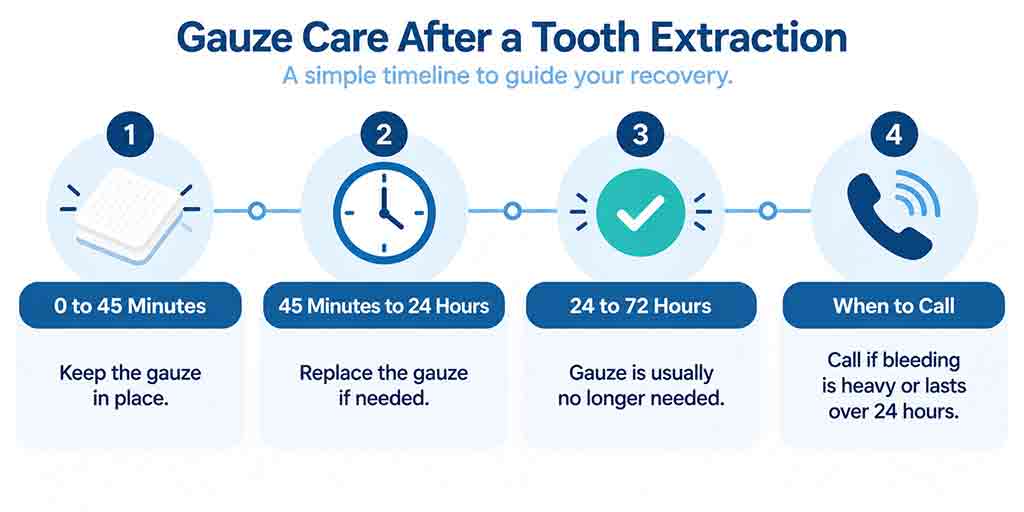
How long you keep gauze in after tooth extraction depends on your individual bleeding pattern, but here’s the standard timeline:
- Place the gauze directly over the extraction site immediately after the tooth is removed.
- Bite down firmly on the gauze for 30 to 60 minutes. This consistent pressure is crucial for blood clot formation.
- After 30 to 60 minutes, carefully remove the gauze and check it. If it’s completely soaked with bright red blood, replace it with fresh gauze.
- Continue checking every 30 minutes. Replace the gauze if bleeding persists.
- Most patients can remove the gauze 3 to 4 hours after extraction once bleeding has stopped or reduced to light oozing.
- After 4 hours, if there’s minimal to no bleeding, you can stop using gauze and transition to other aftercare methods.
For simple extractions, bleeding typically stops within 1 to 3 hours. If you’re still experiencing active bleeding with bright red blood after 4 hours, contact your dentist. If bleeding continues beyond 24 hours, visit your top dentist in Avondale immediately for evaluation.
Why Is Gauze Important After Tooth Extraction?
Gauze is essential because it controls bleeding and helps form the blood clot needed for proper healing.
Here’s why it matters:
- Applies direct pressure to stop bleeding
- Promotes blood clot formation at the extraction site
- Protects the wound from bacteria and debris
- Prevents dry socket, a painful complication
- Creates a stable environment for healing
When a tooth is extracted, the open socket must fill with blood that clots to seal the wound. This clot protects the exposed bone and nerves while new tissue grows. Without proper gauze pressure, the clot may not form correctly, leading to dry socket, which causes severe pain and delays healing.
How Long to Keep Gauze In After Wisdom Tooth Extraction?
Wisdom tooth extractions are often more complex than simple extractions, especially when the teeth are impacted or require surgical removal. For wisdom teeth, keep gauze in after tooth extraction over the site for 30 to 45 minutes initially. Because surgical extractions create larger wounds, you may need to use gauze for a longer duration.
If bleeding continues after the first 45 minutes, replace the gauze and apply firm pressure for another 30 to 45 minutes. Patients who’ve had multiple wisdom teeth removed or surgical extractions may need to change gauze more frequently during the first 3 to 4 hours. The extraction site should form a stable blood clot within this timeframe.
When to Stop Using Gauze After Tooth Extraction
You can stop to keep gauze in after tooth extraction when these conditions are met:
- Bleeding has reduced to minimal oozing or light pink saliva
- A stable blood clot has formed at the extraction site (usually within 3 to 4 hours)
- You feel comfortable without gauze and there’s no increase in pain
- The gauze shows only light staining rather than saturation
Most patients can stop using gauze within 4 hours after a simple extraction. For surgical extractions or wisdom teeth removal, you may need gauze for up to 6 hours. After 24 hours, the blood clot should be stable enough that gauze is no longer necessary.
How to Change Gauze After Tooth Extraction
- Wash your hands thoroughly with soap and water.
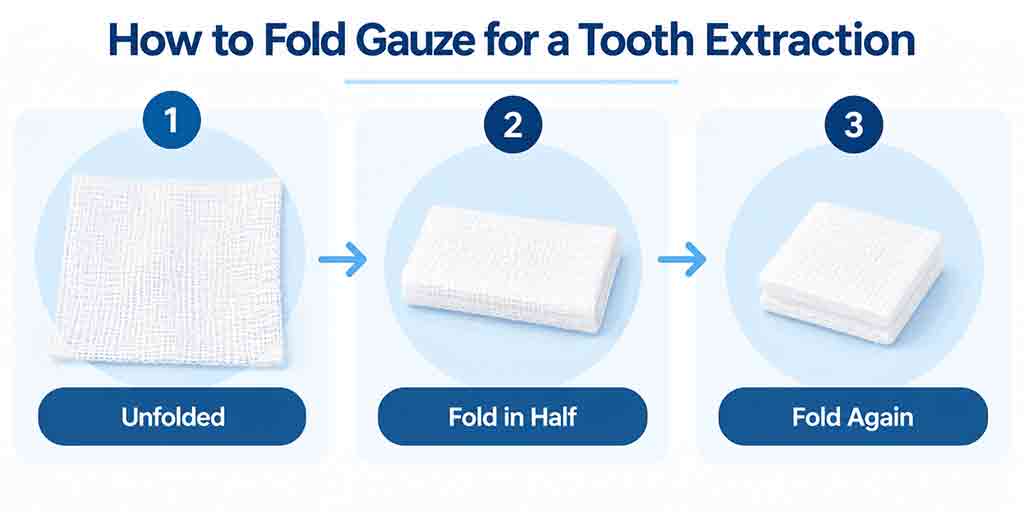
- Prepare a new piece of sterile gauze by folding it into a thick pad, typically using 2×2 or 4×4 inch gauze squares.
- Gently remove the old gauze without disturbing the extraction site.
- Place the fresh gauze pad directly over the extraction site.
- Bite down firmly with steady pressure. Avoid chewing motions or moving your jaw.
Change the gauze every 30 to 45 minutes if it becomes saturated with blood. However, avoid changing it too frequently, as this can disrupt clot formation.
Should You Sleep With Gauze After Tooth Extraction?
No, don’t sleep with gauze in your mouth. It’s a choking hazard. If you’re still bleeding at bedtime, replace the gauze right before lying down and check if bleeding has stopped. Once you see only light pink saliva, remove the gauze before sleeping.
Sleep with your head elevated on 2-3 pillows to reduce blood flow and minimize overnight oozing. Place a towel on your pillow in case of minor bleeding. If you wake up with active bleeding, use fresh gauze for 30 minutes, then remove it before going back to sleep.
Common Mistakes When Using Gauze
Avoid these errors that can interfere with healing:
- Changing gauze too frequently (every 10 to 15 minutes), which disrupts clot formation
- Not applying enough pressure when biting down
- Talking excessively or moving your mouth while gauze is in place
- Using cotton balls or tissue instead of sterile gauze
- Removing gauze to check the site constantly
- Rinsing your mouth vigorously while using gauze
- Drinking through a straw, which creates suction that can dislodge the clot
Let’s Recap
You can keep gauze in after tooth extraction in Avondale to control bleeding and supports healing. Keep it in place for 30 to 60 minutes initially, changing every 30 to 45 minutes if needed until bleeding stops, usually within 3 to 4 hours. Apply firm pressure and avoid changing gauze too often or talking excessively. If bleeding continues past 4 hours or you notice complications, contact your dentist.
At Desert Lake Family Dentistry in Avondale, Dr. Shayegan, DMD, FICOI, brings over 25 years of experience with a calm, thorough approach focused on long-term oral health.
If you experience excessive bleeding, severe pain, or signs of infection after extraction, call 623-388-5888 or visit us at 10750 W McDowell Rd, Suite B200, Avondale for prompt care.
FAQs
Can you leave gauze in your mouth for too long?
Yes. Leaving it in too long increases infection risk and can stick to the clot. Change it every 30–45 minutes if soaked, and remove it once bleeding stops—usually within 3–4 hours.
Can I use cotton instead of gauze after tooth extraction?
No. Cotton sheds fibers that can stick to the wound. Use sterile medical gauze only.
Can I drink water with gauze in my mouth?
Avoid drinking until you remove the gauze. Doing so can saturate it and create suction that may dislodge the clot.
How do I know if my blood clot fell out?
You may see an empty socket, have severe pain 2–4 days after the extraction, notice bad taste or breath, or see exposed bone. Contact your dentist if this happens.
Is it normal to taste blood after tooth extraction?
Yes, light bleeding or a blood taste for 12–24 hours is normal. If you taste fresh blood or see bright red bleeding after 4 hours, call your dentist.
Can I talk with gauze in my mouth?
Keep talking to a minimum. Jaw movement reduces pressure on the site and can prolong bleeding.
What if I run out of gauze after tooth extraction?
Use a moistened black tea bag temporarily, it helps clotting. A clean cloth works only in emergencies. Get sterile gauze from your dentist or a pharmacy as soon as possible.