
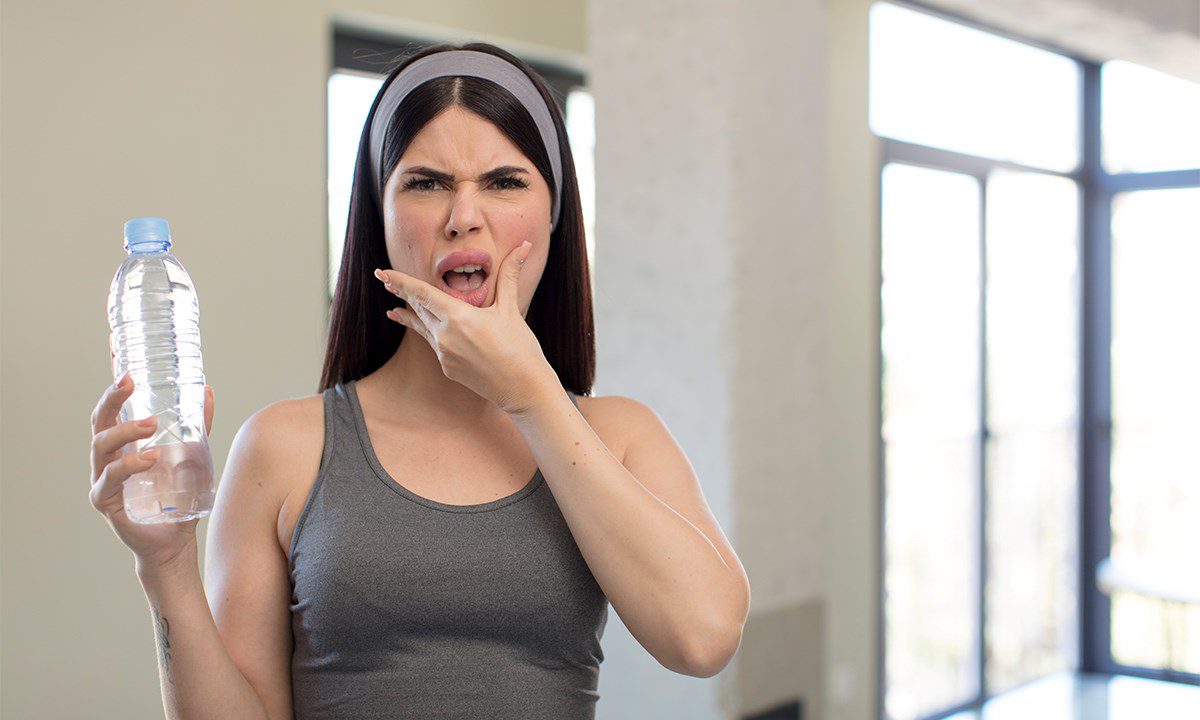
You just finished a full glass of water, and your mouth still feels dry, sticky, or almost cottony seconds later. If you’ve searched “why does my mouth feel dry after drinking water?”, you’re dealing with a real, common problem, not something in your head.
The short answer is that water only fixes dry mouth when dehydration is the cause. If a medication, a health condition, or reduced saliva production is behind it, drinking more water won’t solve it on its own.
In this blog, we’ll walk through what’s actually making your mouth dry after drinking water, which home remedies genuinely help, and the signs that mean it’s time to see a dentist or doctor instead of waiting it out.
This article is for general information and isn’t a substitute for an in-person exam. If you’re dealing with ongoing dry mouth, a dentist or doctor can tell you what’s actually going on.
Table of Contents
ToggleWhat Is Dry Mouth (Xerostomia)?
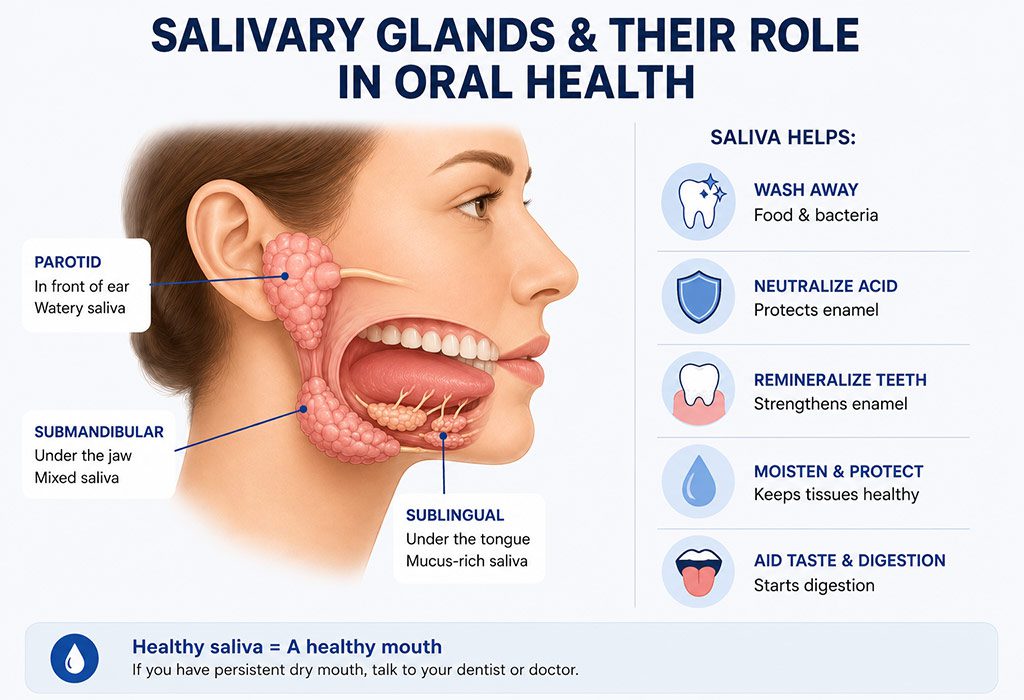
Dry mouth, also called xerostomia, happens when your salivary glands do not make enough saliva. Saliva does more than keep your mouth wet. It washes away leftover food, neutralizes acid from bacteria, and helps keep the balance inside your mouth healthy. When saliva flow drops, none of these jobs get done as well, which is why dry mouth can lead to bigger problems over time if it sticks around.
Dry Throat After Drinking Water: How It’s Connected
Saliva does not just coat your mouth. It coats your throat too. If your salivary glands are not producing enough, your throat can feel just as dry and scratchy as your mouth, even seconds after you swallow water. This is why some people notice a dry, sore throat alongside a dry mouth, especially first thing in the morning or after talking for a long time.
Dry Mouth Symptoms
The most common signs of dry mouth include:
- A dry feeling that does not go away even after drinking fluids
- Changed or reduced sense of taste
- Trouble chewing, swallowing, or speaking
- More cavities than usual
- Dentures that no longer fit comfortably
Dry mouth can also show up in less obvious ways, including:
- Cracked lips
- Mouth sores
- Bad breath
- A rough or dry feeling tongue
- A burning sensation in the mouth
- Repeated mouth infections


Why Does Your Mouth Still Feel Dry Even When You’re Drinking Plenty of Water?
There are several possible answers to why you have dry mouth after drinking water. Here are the common causes of dry mouth that water alone cannot fix.
Medications
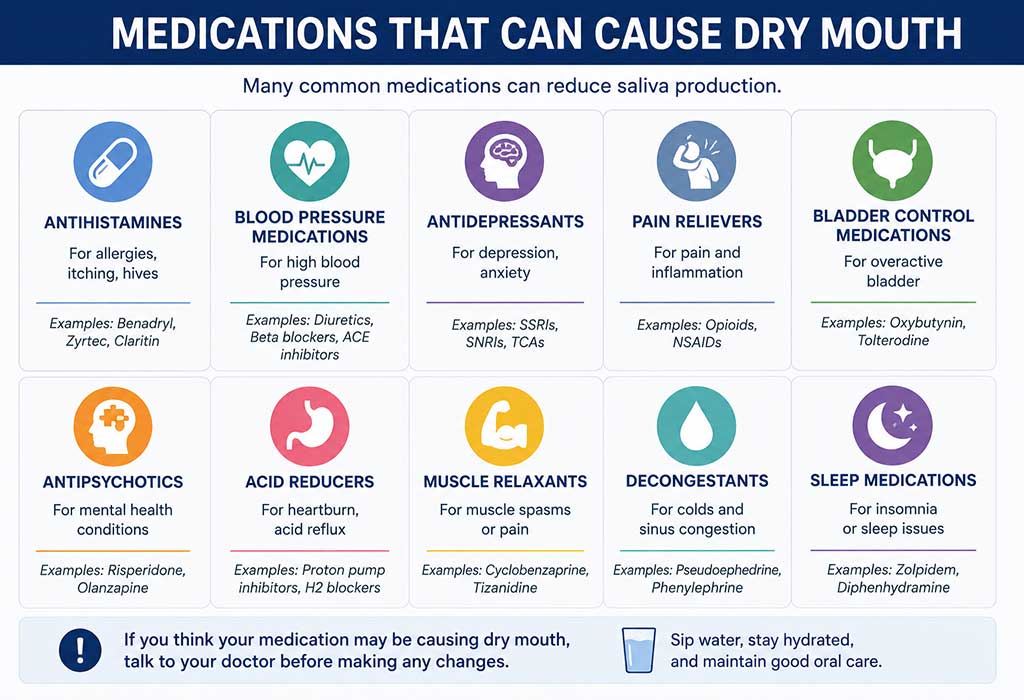
Many common medications, including antihistamines, blood pressure drugs, antidepressants, and some pain relievers, reduce how much saliva your glands produce. Water can rinse your mouth for a minute, but it can’t replace the saliva your body isn’t making. This is why the dryness comes right back.
Medical Conditions
Conditions like diabetes, Sjögren’s syndrome, and other autoimmune disorders directly affect the salivary glands. When the glands themselves aren’t working properly, no amount of water restores the saliva they should be producing, so the dry feeling returns no matter how much you sip.
Radiation Treatment
Radiation therapy to the head or neck can damage salivary glands, sometimes permanently. When the glands can no longer produce enough saliva, water can wet the mouth for a moment, but it can’t restore what the glands can’t make on their own.
Mouth Breathing
If you breathe through your mouth, especially while sleeping or concentrating, air constantly passes over your tongue and cheeks and dries them out. This is one of the most common reasons water seems to help for a few minutes, and then the dryness comes right back. The water leaves, but the mouth breathing continues.
Aging
Saliva production naturally slows down with age, and older adults are also more likely to take medications that add to the problem. This combination means a glass of water may moisten the mouth briefly without addressing the lower saliva output underneath.
Tobacco and Alcohol
Smoking, vaping, and alcohol all interfere with saliva flow and can leave the mouth feeling dry and rough. Water can dilute the irritation for a short time, but it doesn’t reverse the effect these substances have on the glands.
Spicy or Salty Foods
Spicy and salty foods can leave a lingering dry, rough feeling on the tongue and roof of the mouth. Water may wash away some of the residue, but the irritation to the tissue can take longer to settle, which is why the dryness can feel like it’s hanging on.
Why Doesn’t Drinking Water Fix Dry Mouth?
Water wets your mouth, but it doesn’t make your salivary glands produce saliva. Saliva is what actually protects and moistens your mouth over time. Water just passes through, so any relief is short-lived.
This is also why your mouth can feel drier right after a drink than it did before. Water can temporarily rinse away the thin layer of saliva already coating your mouth. For a few moments after you swallow, before saliva re-coats everything, your mouth can genuinely feel drier than before you drank.
If your glands are already making less saliva, from a medication, a health condition, or nerve damage, water can’t make up for it. The problem is saliva production, not fluid intake, which is why “just drink more water” doesn’t work for a lot of people.
Safe Home Care for Dry Mouth
If you just drank water and your mouth is still dry, these steps address the problem more directly than water alone.
- Sip water throughout the day instead of drinking it all at once. Small, frequent sips keep the mouth moist longer than one large glass, which only helps for a few minutes.
- Chew sugar-free gum or suck on sugar-free candy. This stimulates the salivary glands to produce their own moisture, which lasts longer than water sitting in the mouth.
- Try an alcohol-free mouth rinse made for dry mouth. Regular mouthwash with alcohol can make dryness worse, so look for one labeled specifically for dry mouth relief.
- Use a humidifier in your bedroom at night. This is especially helpful if mouth breathing during sleep is part of the problem, since it keeps the air from pulling moisture out of your mouth while you rest.
- Limit caffeine and alcohol, since both can reduce saliva production over time and work against the hydration you’re already getting from water.
- Avoid tobacco products, as they dry out the mouth and reduce the benefit of any water you drink.
- Ask your doctor about saliva substitutes or prescription saliva stimulants if the dryness is frequent. They can replace or trigger the moisture your mouth isn’t producing on its own.
Limits of Self-Treatment
These steps can ease the dry feeling in the moment, but they don’t fix what’s causing your glands to underproduce saliva in the first place. If your mouth feels dry after drinking water constantly, that pattern is a sign the cause needs to be identified, not just managed with more water. Home care can make day-to-day comfort better, but it can’t replace a diagnosis if a medication, medical condition, or gland problem is behind the dryness. So more frequent preventive care is worth asking about while you work on the cause.
When to See a Dentist or Doctor for Dry Mouth
See a dentist or doctor if you notice any of the following:
- Your dry mouth lasts more than two weeks, even with home care.
- The dryness started right after you began a new medication.
- The dryness started after radiation or chemotherapy treatment.
- Your eyes also feel dry or gritty along with your mouth.
- You have unexplained thirst that doesn’t go away with normal drinking.
- You’re urinating more often than usual without a clear reason.
A dentist can check the oral side of things during a routine exam and work with your prescribing doctor if medication is the cause. If you suspect diabetes, Sjögren’s syndrome, or a kidney-related issue, your primary care doctor is the right first call.
Dry Mouth Care at Desert Lake Family Dentistry
Why does my mouth feel dry after drinking water? The cause is usually something that is reducing how much saliva your glands produce, whether that’s a medication, mouth breathing, aging, or a medical condition. Home care can ease the discomfort in the meantime, but it won’t fix what’s causing the dryness, and a few warning signs mean it’s worth getting checked.
Desert Lake Family Dentistry checks for dry mouth and its effects on your teeth and gums as part of a routine cleaning and exam in Avondale, AZ. We can also spot early signs of decay or gum irritation that dry mouth tends to cause, and coordinate with your doctor if a medication is behind it.
Still dealing with a dry mouth that won’t go away, even after drinking water? Call 623-388-5888 or schedule a checkup at 10750 W McDowell Rd, Suite B200, Avondale, AZ 85392.
FAQs
Why does my mouth still feel dry after drinking water?
Water only helps if dehydration is the cause. A medication, condition, or low saliva won’t be fixed by water.
What causes dry mouth even when I’m drinking enough water?
Medications, mouth breathing, aging, and conditions like diabetes or Sjögren’s reduce saliva, not lack of water.
How long does dry mouth from drinking water last?
If it returns within minutes, it won’t stop until the cause is treated. One salty meal clears in an hour or two.
Can drinking more water fix dry mouth?
No. Water helps briefly but can’t replace missing saliva. Ongoing dryness means the cause needs attention.
Is dry mouth after drinking water a sign of a medical condition?
It can be, especially with dry eyes, unexplained thirst, or frequent urination. Mention it to your doctor or dentist.
What can I do besides drinking water to relieve dry mouth?
Sugar-free gum, alcohol-free rinses, a humidifier, and less caffeine and alcohol help more, since they target saliva directly.
References
- National Institute of Dental and Craniofacial Research. Dry Mouth. nidcr.nih.gov
- Mayo Clinic. Dry Mouth: Symptoms and Causes. mayoclinic.org
- Cleveland Clinic. Dry Mouth (Xerostomia). my.clevelandclinic.org
- Sjögren’s Foundation. Living with Sjögren’s: Dry Mouth. sjogrens.org
- MedlinePlus, U.S. National Library of Medicine. Dry Mouth. medlineplus.gov