
Can I Vape After Teeth Whitening?
July 17, 2025
What is the 3 Finger Test for TMJ?
July 24, 2025Updated: 07/01/2026
Toothache pain can start suddenly and range from mild discomfort to severe, throbbing pain. It often comes from inflammation, decay, infection, or pressure in the tooth or gums.
The 3-3-3 rule is an informal approach that people commonly associate with the short term use of ibuprofen to help reduce pain and inflammation. While it may provide temporary comfort for some adults, it is not a treatment for the underlying dental problem.
In this guide, our dentists explain what the 3-3-3 rule is, how it is commonly understood, who should avoid it, when tooth pain may signal a dental emergency, and why treating the underlying cause is the key to lasting relief.
This article is provided for educational purposes only and is not a substitute for a professional dental examination or personalized medical advice.
Table of Contents
ToggleWhat Is the 3-3-3 Rule for Tooth Pain?
The 3-3-3 rule for tooth pain is an informal term people use for short-term relief of dental pain using over the counter ibuprofen. It is not an official dental guideline or treatment plan.
It is commonly linked to taking:
- 600 mg of ibuprofen (three 200 mg tablets)
- Three times a day (Repeat every ~8 hours if needed)
- For up to three days
Remember:
- Do not exceed 3 days unless your healthcare provider advises it
- Stop and seek medical advice if you get stomach pain, nausea, or side effects
This is only a general reference and may not be safe or suitable for everyone. Dentists may sometimes suggest anti-inflammatory medicine to help reduce pain and swelling for a short time. The correct use depends on your medical history, current medications, age, and the cause of the tooth pain.
This approach is only for temporary relief. It does not treat infections, cavities, or nerve problems. If pain continues or gets worse, you should see an Avondale dentist.
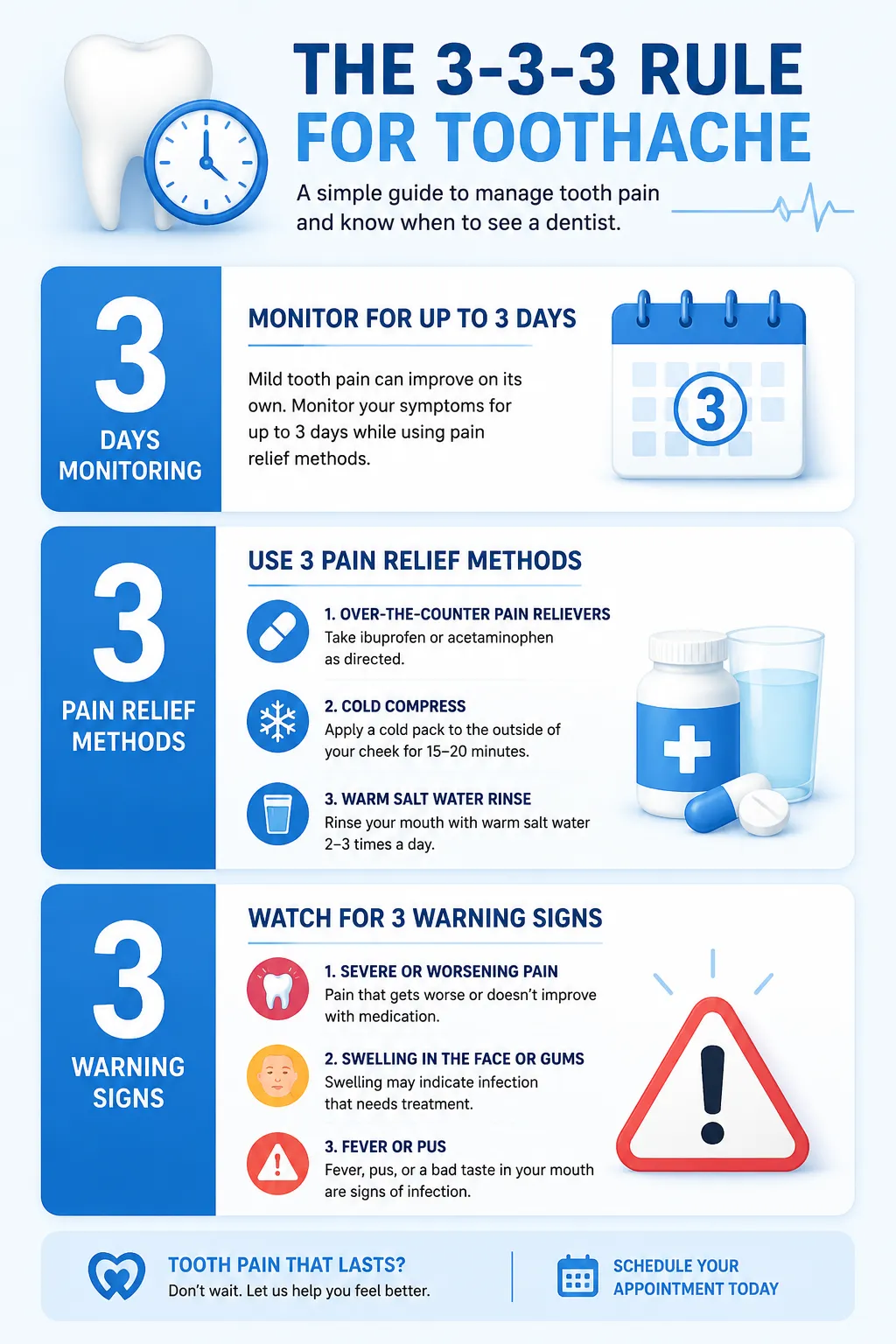
What Is the 3-3-3 Rule
3-3-3 Rule: What It Does vs What It Does Not Do
| Aspect | What It May Help With | What It Does NOT Do |
| Pain relief | May temporarily reduce tooth pain and discomfort | Does not cure cavities or infection |
| Inflammation | May lower swelling around tooth or gums | Does not remove the source of inflammation |
| Infection | No direct effect | Does not treat abscess or bacterial infection |
| Tooth structure | No structural effect | Does not repair cracked or decayed teeth |
| Long term outcome | Short term comfort only | Not a long-term dental solution |
How the 3-3-3 Rule Is Commonly Understood
The 3-3-3 concept is often used as a simple way to manage short term tooth pain while waiting for dental care. It is based on the use of ibuprofen, a common NSAID (non steroidal anti inflammatory drug) that helps reduce pain by lowering inflammation.
Tooth pain is often caused by inflammation in the tooth nerve or surrounding gums. When tissues become inflamed, pressure increases in a tight space, which can intensify pain. Ibuprofen may help reduce this inflammation, which can temporarily lower pain and swelling.
NSAIDs like ibuprofen work by blocking chemicals in the body (prostaglandins) that trigger inflammation, pain, and swelling. This is why they are commonly used for dental pain rather than just masking symptoms.
There is no official medical guideline behind the “3-3-3 rule.” It is not a standardized dosing protocol. People should always follow the medication label or their dentist’s instructions and consult a healthcare professional before using any pain medication.
What Causes Toothache?
A toothache can happen for several reasons. In most cases, pain starts when the tooth, nerve, or gums become inflamed or infected. Common causes include:
Cavity
It creates small holes in the enamel that can reach the inner nerve and cause pain.
Cracked tooth
A crack in your tooth can expose sensitive inner layers and cause sharp pain when chewing or biting.
Abscess
It is a pocket of infection that builds up at the root of the tooth or in the gums. It can cause severe, throbbing pain.
Gum disease
Infection in your gums can lead to inflammation, tenderness, and pain around the teeth.
Wisdom teeth
Wisdom teeth may cause pain when they grow in the wrong positions, become impacted, or create pressure on nearby teeth.

Benefits of Short-Term Pain Relief Approaches
If you use it appropriately and safely under label guidance, anti-inflammatory pain relief may help:
- Reduce tooth pain and inflammation
- Improve comfort while waiting for dental care
- Support sleep when pain is disruptive
- Reduce sensitivity caused by pressure or swelling
Tooth pain caused by infection or cavities should be evaluated early. Our clinic offers complete general dentistry care in Avondale to restore oral health.
Safety Guidelines and Important Warnings
You should always use over-the-counter pain medications according to label instructions and professional guidance.
Consult a dentist, physician, or pharmacist before use, especially if you have:
- Pregnancy
- History of stomach ulcers or gastrointestinal bleeding
- Kidney or liver disease
- Heart conditions or high blood pressure
- Blood-thinning medications
- Known allergy to NSAIDs or pain relievers
Also:
- Do not stop or skip doses early just because pain improves. Early relief can be temporary, and symptoms may return if inflammation is not fully controlled.
- Take ibuprofen only as directed on the product label or by your dentist or healthcare provider. Do not adjust the dose without medical advice.
- Do not continue self-medication beyond 3 days. If pain persists after this period, stop and contact a dentist promptly.
Common Mistakes with the 3-3-3 Rule for Toothache
The 3-3-3 rule can cause problems when people treat it like a cure. It is only a temporary pain management concept. It does not remove decay, repair cracks, drain infection, or save an infected tooth.
Common mistakes include:
- Relying on pain relief without a dental exam
- Ignoring worsening symptoms
- Using medication longer than recommended on the label
- Delaying care for swelling or infection signs
- Assuming pain reduction means the problem is resolved


What If Tooth Pain Does Not Improve?
If tooth pain continues or becomes more intense, it is important to seek dental care. While waiting for an appointment, some short-term comfort measures may help:
- Rinse gently with warm salt water.
- Use a cold compress on the outside of the cheek.
- Keep your head elevated while resting.
- Avoid hard, hot, or very sweet foods.
- Keep the area clean to reduce irritation.
If pain is severe or worsening, contact Desert Lake Family Dentistry for emergency dental care in Avondale.
Can You Rely on the 3-3-3 Rule Too Long?
The 3-3-3 approach is intended only for short-term relief while waiting for dental care. It is not a long-term solution for tooth pain.
If ibuprofen is used for an extended period without a dental evaluation, it may temporarily reduce symptoms while the underlying cause continues to progress. Conditions such as deep decay, infection, or gum disease can worsen without proper treatment.
For this reason, ongoing tooth pain should always be assessed by a dentist as soon as possible rather than managed only with medication.
When to See a Dentist Immediately
You should visit your dentist if you experience:
- Severe or worsening tooth pain
- Swelling in the gums, face, or jaw
- Fever or signs of infection
- Pain lasting longer than 48–72 hours
- Difficulty chewing or biting
- Pus, bad taste, or gum boil
- Pain spreading to the ear, jaw, or neck
These signs may indicate infection or advanced decay. Conditions like this may require root canal treatment or other urgent dental procedures.
Let’s Recap
The 3-3-3 rule for toothache is a commonly discussed concept for temporary pain relief only. It is not a treatment and should not replace professional dental care. If you are experiencing tooth pain, early diagnosis leads to better outcomes and simpler treatment options.
For safe, compassionate care and lasting relief, Desert Lake Family Dentistry in Avondale is here to help. With Dr. Shayegan’s 25+ years of experience, you’ll get expert evaluation and personalized treatment.
If your tooth pain lasts more than a day or two, don’t wait for it to become an emergency. Our Avondale dental team can identify the underlying cause and recommend the most appropriate treatment, from fillings and root canal therapy to emergency dental care.
Call 623‑388‑5888 or visit 10750 W McDowell Rd, Suite B200, Avondale to restore your comfort and keep your smile healthy.
Our References
We base this information on guidance from trusted medical and dental organizations:
- American Dental Association (ADA) — https://www.ada.org
- American Academy of Family Physicians (AAFP) — https://www.aafp.org
- MedlinePlus (U.S. National Library of Medicine) — https://medlineplus.gov
- National Institutes of Health (NIH) — https://www.nih.gov
FAQs
Is the 3-3-3 rule safe?
It may be used for short-term comfort when following label instructions, but it is not safe for everyone. Always consult a healthcare professional first.
Does the 3-3-3 rule treat infection?
No. It may reduce pain temporarily, but it does not treat infection or remove its cause.
Can it help with wisdom tooth pain?
It may temporarily reduce discomfort, but impacted or infected wisdom teeth require dental evaluation.
What if tooth pain continues?
Persistent pain usually indicates an underlying dental issue and should be examined by an Avondale dentist.
Can children use this approach?
Children require age- and weight-specific guidance from a pediatric dentist or physician.
Is pain relief enough for a toothache?
No. Pain relief only manages symptoms. Dental treatment is required to fix the cause.
When is tooth pain an emergency?
When pain is severe, persistent, or combined with swelling, fever, or signs of infection, urgent dental care is needed.
Keyword: 3-3-3 Rule for Toothache
Meta Title: What is the 3-3-3 Rule for Toothache? | Desert Lake Family Dentistry
Meta Description: Learn what dentists say about the 3-3-3 rule for toothache, safe short-term relief, warning signs, and when to see a dentist.