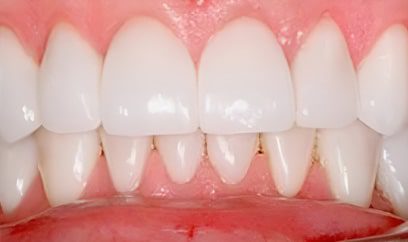
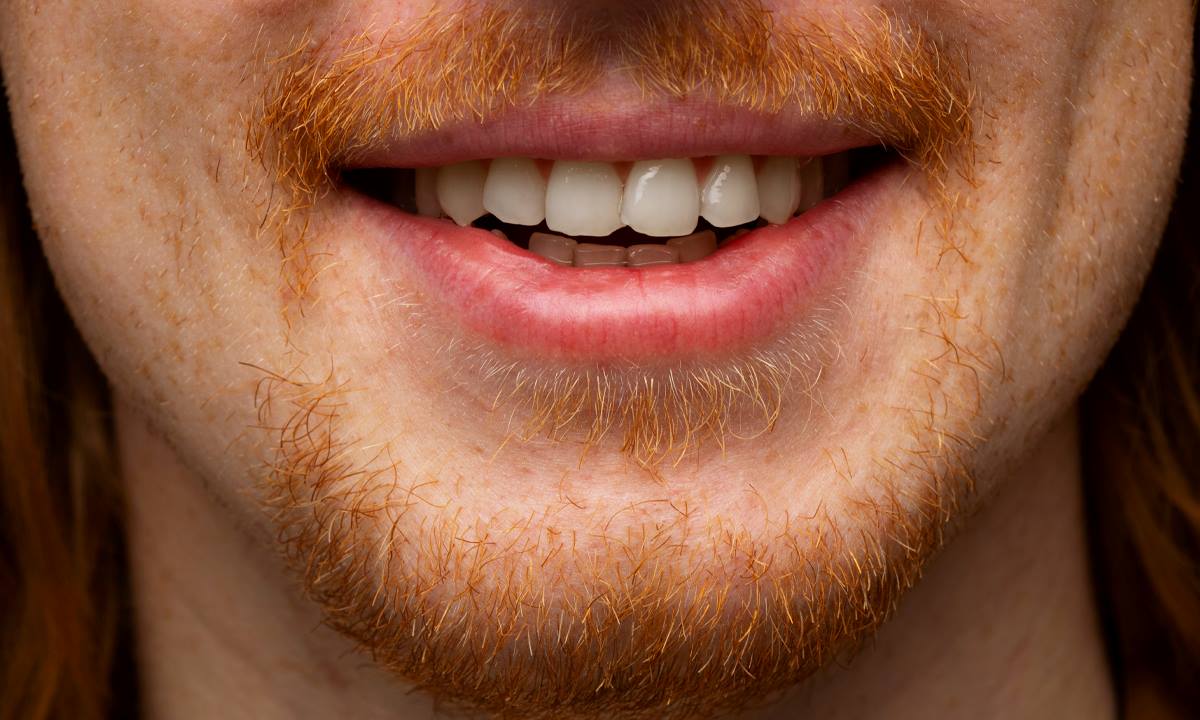


Overlapping teeth, sometimes called stacked teeth, happen when one tooth sits in front of or behind another instead of in a straight line. Dentists call this dental crowding or malocclusion. A visible overlap in your smile can be hard to ignore, especially if you notice it in every photo.
So, how to fix overlapping teeth? You can treat overlapping teeth with professional options such as braces or clear aligners, and in some cases with bonding or veneers. The right choice depends on how severe the crowding is.
Table of Contents
ToggleWhat Causes Overlapping Teeth?
A few things commonly lead to stacked or crowded teeth. Here are the main causes:
- A jaw size that is smaller than the space your adult teeth need. This often comes down to genetics and runs in the family.
- Habits from early childhood, such as thumb sucking or long-term pacifier use, that push teeth out of line.
- A baby loses a tooth too soon, which lets nearby teeth drift into the open space.
- An extra tooth, or a tooth that comes in at the wrong angle and crowds the ones next to it.
- Mouth breathing or tongue thrusting in childhood, which can affect how the jaw and teeth develop.
- Natural shifts with age, which can happen even years after braces.
Tooth crowding caused by these factors is one of the most common bite problems dentists treat.
How to Straighten Overlapping Teeth with Professional Treatments
There is more than one treatment for teeth overlapping, and the best way to fix overlapping teeth depends on how mild or severe your case is. A dentist can look at your bite and guide you toward the right option.
Fixing overlapping teeth becomes important when:
- The overlap causes a lisp or changes the way words come out.
- Chewing or speaking feels harder than it should.
- The misalignment can contribute to jaw pain.
- Grinding or clenching the teeth can become a regular habit.
- Biting the inside of the cheek happens often.
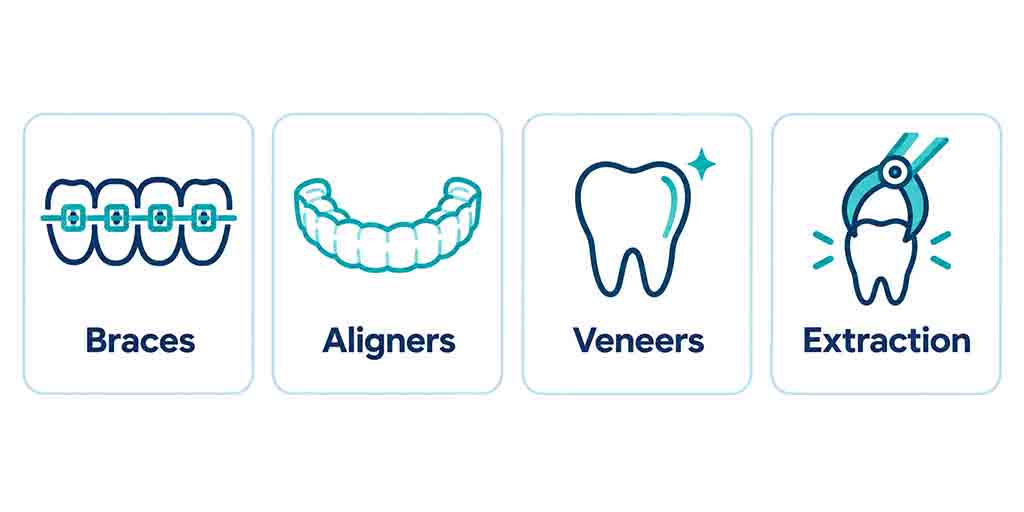
Traditional Metal Braces
Traditional metal braces use brackets and wires fixed to each tooth. The wire applies steady pressure over time, which slowly guides the teeth into a straighter line. Braces remain one of the most reliable options for moderate to severe crowding, including cases with several overlapping teeth. Treatment often takes well over a year, though the exact length depends on your case and your dentist’s plan.
Clear Aligners
They are a set of clear, removable trays that gradually shift teeth into place. Clear aligners or Invisalign for overlapping teeth tends to work best for mild to moderate crowding, and many adults choose them because they are harder to notice day to day. Aligners only work on schedule, so they call for steady wear, usually about 20 to 22 hours a day, to stay on track (American Association of Orthodontists).
Cosmetic Bonding or Veneers
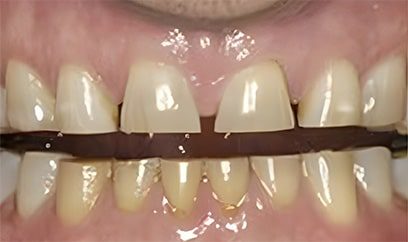
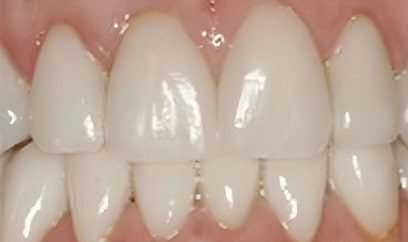
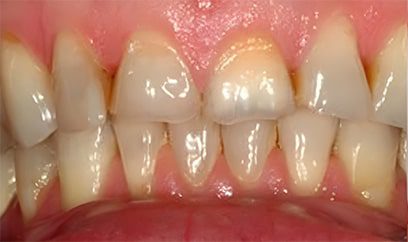
Cosmetic bonding and dental veneers do not move teeth. Instead, a dentist reshapes or covers the front of the tooth so a small overlap looks straighter. This is a faster option for a minor overlap, and it works well on one or two front teeth. It will not fix a crowded bite or the health issues that come with real crowding, so it fits cosmetic cases only.
Extraction or Jaw Surgery
In more severe or complex cases, a dentist may remove one tooth to make room for the rest to line up. When crowding involves the jaw itself and not just the teeth, your dentist may refer you to a specialist for jaw surgery, also called orthognathic surgery. Minor tooth contouring, which gently smooths the edge of a tooth, can help with a very small overlap, but it will not fix true crowding on its own.
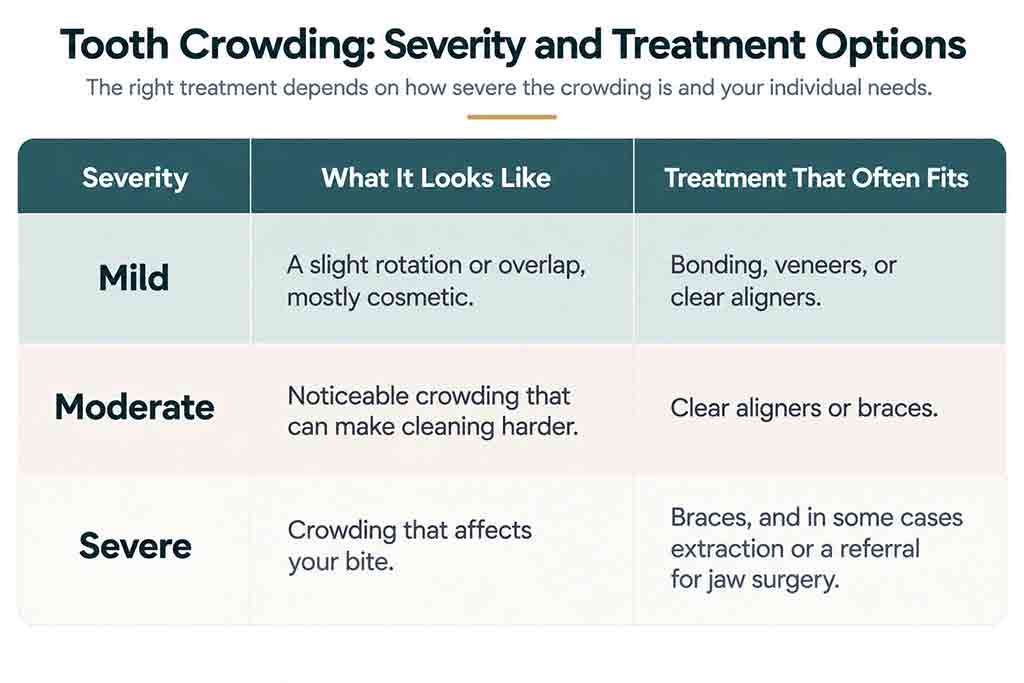
Note: Think of this table as a starting point for a conversation with your dentist, not a diagnosis.
How to Fix Overlapping Front Teeth
Front teeth carry most of the attention in a smile, so it helps to know your options specifically for uneven or crooked teeth on the front. An overlapping front teeth treatment often starts with the option that fits your goals, not just your bite.
Here are the main options:
- Veneers or bonding, which usually work well for a small overlap on one or two front teeth since nothing needs to physically move.
- Clear aligners, a good fit for mild rotation.
- Braces, still the better answer when more than one or two teeth overlap or the issue affects your bite.
How to Fix Overlapping Front Teeth at Home
Once you understand how to fix overlapping teeth on the front side, daily care matters just as much for keeping overlapping teeth healthy while you wait for or complete treatment.
Daily Cleaning Around Overlapping Teeth
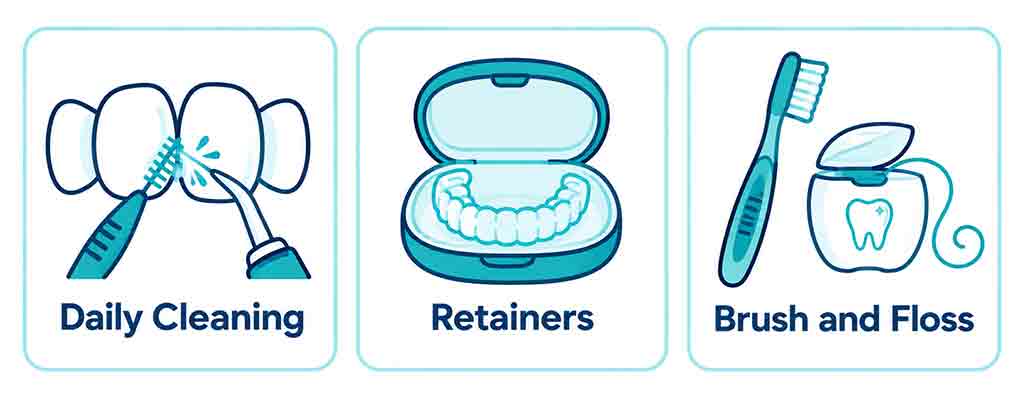
Overlapping teeth create tight spots that regular brushing and floss can miss, so food and plaque build up there faster. An interdental brush or a water flosser reaches those spots better than floss alone, which lowers plaque buildup and your risk of decay.
Retainers
A retainer holds your teeth in place. It does not move them, so it cannot fix an existing overlap by itself. Once braces or aligners finish moving your teeth, a custom retainer is what keeps them from drifting back to their old position. Skipping the retainer is a common reason teeth start to overlap again after treatment.
Safe At-Home Care
You cannot shift your teeth on your own, but you can still lower your risk of decay in crowded spots. Here are a few habits that help:
- Brush and floss every day to clear away trapped food.
- Use an interdental brush or a water flosser to clean the tight spaces where the overlap sits.
- Visit your dentist for regular checkups, so plaque buildup does not turn into a bigger problem (American Dental Association).
Can Overlapping Teeth Be Fixed Without Braces?
Yes, for mild cases. Clear aligners, bonding, or veneers can fix a minor overlap without braces, and each works in a different way. Aligners move the teeth gradually, while bonding and veneers change only the visible shape of the tooth. Moderate to severe crowding usually still needs braces or aligners, since those are the only options that actually move teeth into a new position instead of just changing how they look.
Are Overlapping Teeth Serious?
A mild overlap is often just a cosmetic issue, and it does not need urgent treatment. Moderate to severe crowding is a different story. It can make these teeth harder to clean, which raises the risk of decay and gum irritation over time, and it can affect how your upper and lower teeth meet when you bite down (AAO). If you notice any of these problems, it is worth bringing up at your next dental visit rather than treating it as an emergency.
How Long Does It Take to Fix Overlapping Teeth?
Treatment time depends on your case:
- Mild cases treated with aligners or bonding often finish faster, sometimes in a few months.
- Moderate to severe crowding treated with braces usually takes longer, often more than a year.
Your dentist can only give you a real timeline after checking your bite in person, so treat any range you read online as a starting point, not a promise.
Let’s Recap
So, how to fix overlapping teeth? It depends on how severe the overlap is: mild cases often need only bonding or veneers, while noticeable crowding usually calls for aligners or braces. A dentist is the only one who can confirm what fits your smile, so use this guide as a starting point and book a consultation for the rest.
Ready for Your Overlapping Teeth Treatment?
If you are looking for overlapping teeth treatment in Avondale, AZ, our team at Desert Lake Family & Cosmetic Dentistry offers cosmetic dentistry and orthodontic treatment options.
Dr. Adel Shayegan, DMD, has practiced dentistry in the Avondale area since 1997, bringing over 25 years of experience to every patient. He holds a Fellowship in the International Congress of Oral Implantologists (FICOI) and is a member of the AGD, ADA, AACD, and AAID. He can walk you through which option fits your case at a consultation.
Call our office at 623-388-5888 or schedule a consultation online to get started.
FAQs
No. A retainer holds teeth in place, but it does not move them, so it cannot fix an existing overlap on its own.
It depends on how severe the crowding is. Aligners tend to work well for mild to moderate cases, while more complex crowding often still needs braces.
Coverage varies by plan and often comes down to whether your treatment counts as medically necessary or cosmetic. Call your insurance provider to confirm your exact benefits before you book.
There is no single right age. Dentists often start checking for crowding as permanent teeth come in during childhood, but adults can start treatment at any age.
Yes, at any age. Most cases are treated with braces or clear aligners, and milder cases can be treated with cosmetic bonding or veneers.
Treating an overlap can make your teeth easier to clean, lower your risk of decay and gum irritation in tight spots, and improve bite comfort in moderate to severe cases. Mild cases are often a personal choice rather than a necessity.
Veneers or bonding usually work well if the overlap is small and only cosmetic. Clear aligners or braces are the better choice if the teeth actually need to move into a new position.
Yes, in most mild to moderate cases. Braces and aligners can often create enough room by expanding or reshaping the dental arch. Removing a tooth is usually reserved for more severe crowding, and only an in-person exam can confirm which approach fits your case.
Cost depends on the treatment and how severe the crowding is. Braces and clear aligners are usually the highest cost, while bonding and veneers tend to cost less per tooth. See our cost to straighten teeth guide for typical ranges, and book a consultation for an exact price for your case.
For mild overlap, the best treatment is usually bonding, veneers, or clear aligners, since nothing needs to move much and these give the fastest, least invasive fix.